Six Months of Volunteering

By Daisy Roberts

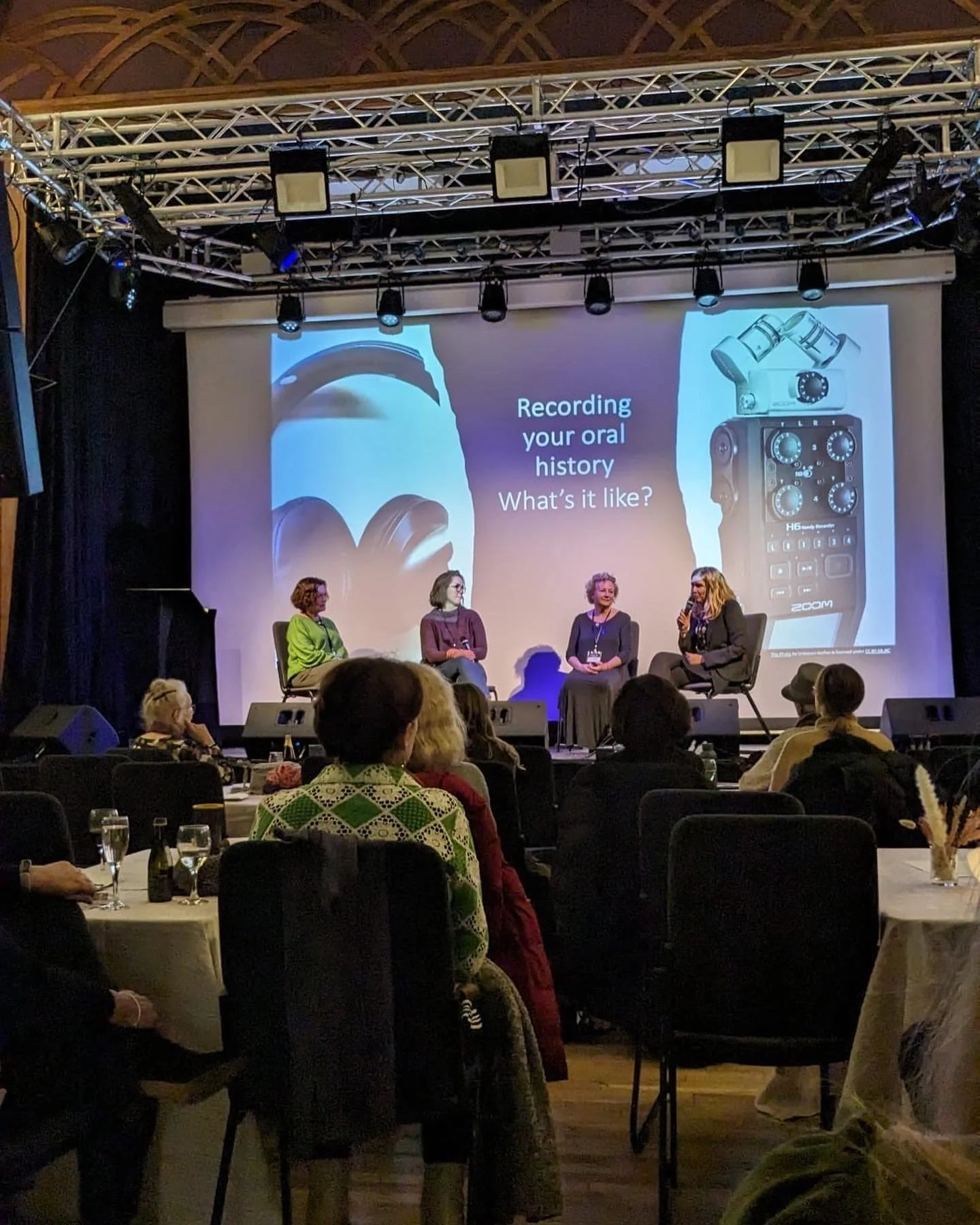
I started volunteering for Una Gan a Guna in March 2021 after attending a (virtual) lecture on oral history interviewing skills delivered by Ruth Beecher, the Project Lead. Ruth’s lecture emphasised the importance of oral history as a means for capturing and recording the experiences of people who have not always been included in histories of wars, politics, and leaders, such as the working classes, women and people of colour. She also highlighted how oral history projects allow interviewers to capture the stories of their own communities, cultures and families, as Una Gan A Guna does. As a history student, I’m very invested in contributing to a historical record that values and includes the histories of every community and as such was very excited to get involved. 

Not having a familial connection to Ireland myself, I have primarily been involved in the project from an administrative angle and I have gained a lot of useful experience working on transcripts, producing interview summaries and completing catalogue documentation prior to interviews being submitted to the archive. I have also worked on administrative documents such as the Style Guide for Transcribing, which aims to help other volunteers produce consistent and accurate interview transcripts, and the Una Gan A Guna Business Plan, which has allowed me to gain insight into the project’s short, medium, and long-term goals and plans for achieving them. 

Most challenging, due to my limited technological know-how, has been working on developing the website to include more information about the project, how to get involved and to share snippets of the histories of the women already interviewed. I have enjoyed getting to grips with managing content via Squarespace and have found working with the stories and images of women who have participated in the project incredibly interesting. As the project focuses on the lives of Irish women between the ages of fifteen and twenty-five, it provides an often very detailed snapshot into someone’s life at an incredibly formative stage as well as an idea of how the world at the time shaped their experiences. Many of the interviews are also completed by family members of the subjects, so it is really captivating to hear daughters, granddaughters, sisters or nieces hear the full version of stories they might have heard extracts of throughout their lives and get to relate to their family member in a new way or on a different level. 
When We Feel Cut Off, Sharing Our Stories is Even More Important

When We Feel Cut Off, Sharing Our Stories is Even More Important

This year, us Irish women in the UK find ourselves stuck. The Irish Sea has become a barrier we can only cross in emergencies, a state of cut-off-ness that was unimaginable little more than a year ago. I struggle to catch up with this new reality, one of many new realities we have encountered this year. Since 1989, I have ricocheted by car, ferry, and plane backwards and forwards from London to Cork to see friends and family. I now see just how privileged as I was to have those choices.

This Year...

Like all you Irish women all over the world, we have been very busy and distracted in the last year and our oral history gathering and transcribing slowed to a standstill (apologies to those waiting). We are on our way out of the cave and back into the light! More news coming soon.

tunnel.jpeg

Getting the Conversation Started

A few interviewers have asked for some guidance or suggested questions to get the conversation started. Once you’ve been through the information sheet again with the interviewee and obtained informed consent and discussed copyright, got your recorder and microphone set up, and are ready to go…

Make sure you are in a place that is comfortable and if possible that there is a minimum of noise/ disturbance. Make sure the person is ok with a session off about 2 hours and suggest a break in the middle (or whenever they need it).

Start by restating the purpose of the project - gathering the stories, memories and opinions of Irish women born in each decade of the twentieth century.  Explain that we are starting with the experiences of Irish women (or women with a connection) from about the ages of fifteen to twenty five. We’re interested in what life was like growing up, family, school, work, money, love, sex, politics, friendships, relationships, and anything really that mattered to them in that period.

Suggested prompts to get started:

  • Can you tell me a bit about yourself for the record – your name, where you live (i.e. Ireland/ England/ wherever and maybe down to county...), anything else you think is relevant.

  • Where in Ireland did you family come from, it would be great to hear a bit about them to set the scene?

  • Tell me about yourself back at fifteen. Where were you living? What were you up to? What was life like day to day?

  • What was family life like? Tell me about your family…

  • Were you in school/ at work? How was that?

  • You can reflect on how people are now if you know them – for example, “I know you love going to concerts now, were you always into music?”

Fear not silences, you don’t need to fill in the gaps. Use lots of open, curious questions and don’t be afraid to go into difficult territory, you are skilled communicators and caring people and you will manage the session really well.

When you’ve finished, as well as taking special care of the SD memory card and documents, do jot down some notes or make a recording of your own experience of doing the interview that we can use for future learning.

Six Interviews Recorded to Date

Really thrilled that we have recorded six interviews this year, with more lined up for Spring 2019. Amy, Dorothy, Ellen, Emily and Ruth were fantastic interviewers and Alice has done lots of transcribing. Next steps include producing summaries and making decisions on the repository but look out for more news about the interviews and some snippets here soon…

The Information Sheet is Here

Our founding members have been hard at work defining what exactly the project is all about...

Check out our information sheet which explains exactly what getting involved means for women who are thinking about whether they would like to be interviewed.  In it, we explain the purpose of the project as well.

The information sheet explains our aim which is to interview a range of women born in Ireland during the twentieth century or those with Irish connections, and eventually to capture the views and memories of women born in every decade from the 1920s to the 1990s. Our sample is found simply through women with whom we have a connection.

There's lots of practical information about how long an interview might take, what happens to the recordings and transcripts, confidentiality, and consent.  Lastly, we explain why the project is called Úna Gan A Gúna...

We're Getting Started

We are the Irish Women's Digital History Collective Tá Úna Gan A Gúna. We're just getting started. What we've achieved so far is to set up a group of founding members with different experiences and skills and from different generations. 

We have started to work out collectively how best to structure the digital history project, to provide good guidelines for people who'd like to get involved, and protect the memories and archive materials that interviewees provide.

We've started the website and our email address faisneis@unaganaguna.org